Motor Sizing
Stator dimensions and naming
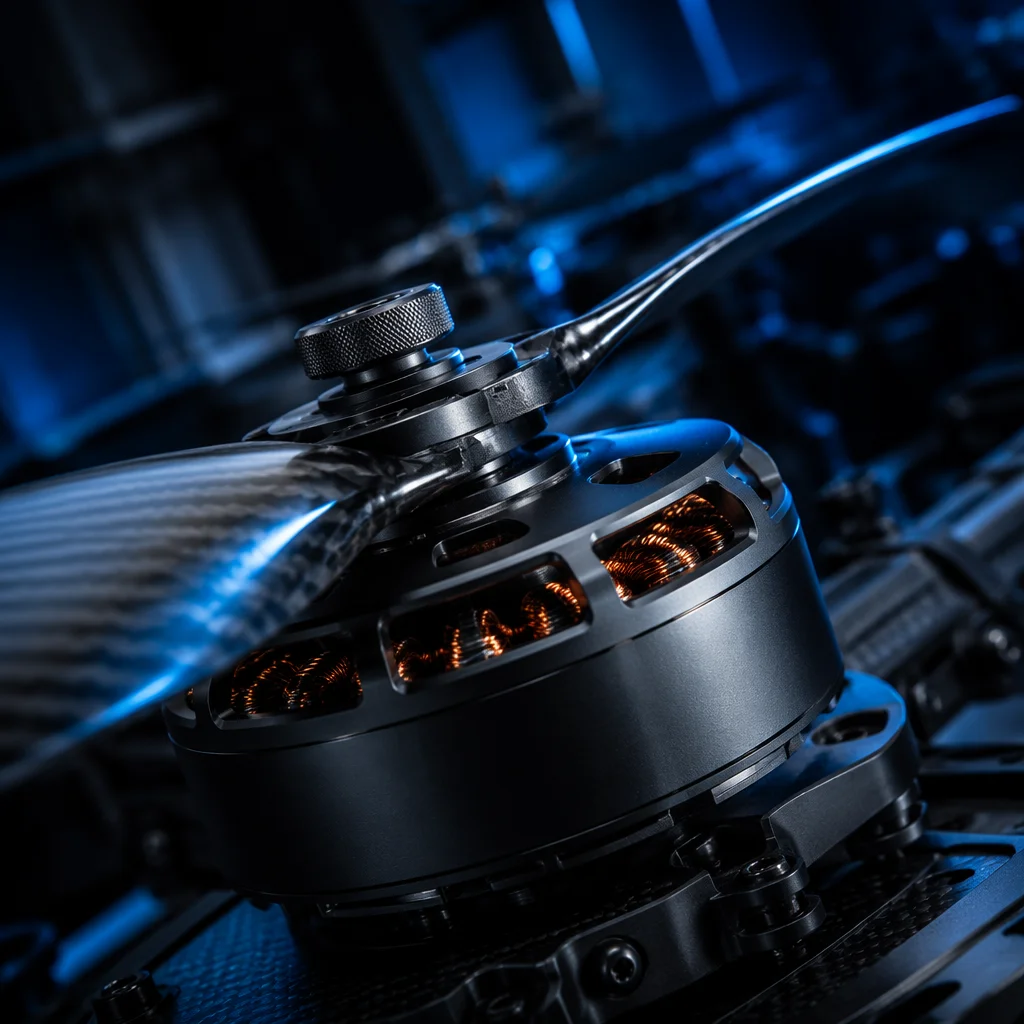
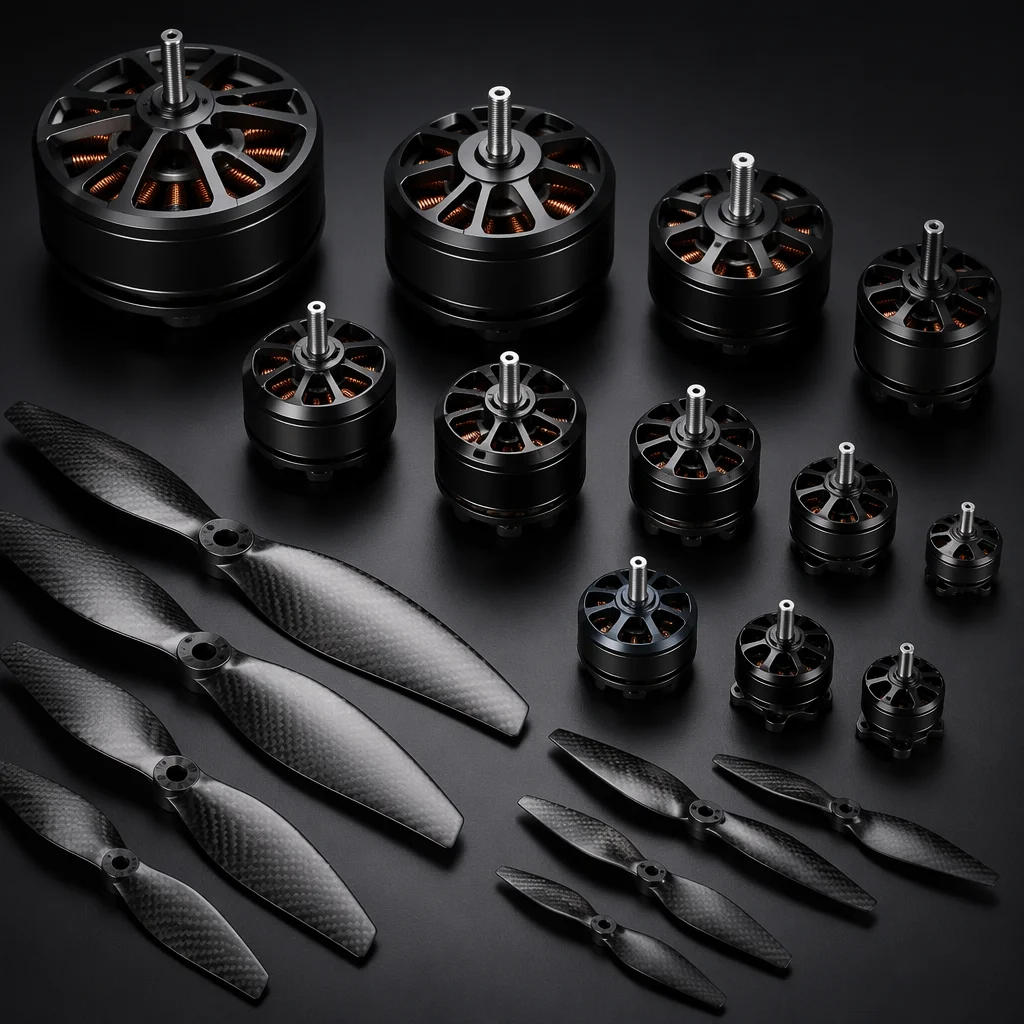
Motor names encode stator dimensions: a 2812 motor has a 28 mm stator diameter and 12 mm stator height. Larger stator volume handles more current and produces more torque — but adds weight. The relationship is not linear: a 2812 at 900 KV on 6S might produce 1.8 kg of thrust with a 9-inch prop, while a 4014 at 400 KV on 6S produces 3.5 kg with a 15-inch prop. Stator width contributes more to torque than height because torque scales with the square of radius.
- 2207–2812 (3–7 inch)
- 3510–4014 (7–15 inch)
- 5010–6215 (15–22 inch)
- 8318+ (24+ inch)
KV Rating
RPM per volt — but not the whole story
KV is RPM per volt with no load. Low KV (300–600) suits large propellers on high voltage — high torque, low RPM, efficient cruise. High KV (1800–2700) suits small propellers on lower voltage — high RPM, responsive throttle, shorter flight times. The practical KV choice is constrained by the battery voltage and propeller size: a 6S battery at 2400 KV would spin a 5-inch prop at over 50,000 RPM — exceeding the structural limits of most plastic propellers. KV must be selected in the context of both voltage and prop diameter.
- Low KV: 300–600
- Mid KV: 800–1200
- High KV: 1800–2700
Efficiency Curves
Every motor has a sweet spot
Motor efficiency (grams of thrust per watt) peaks at 40–60% of max throttle for most outrunners. Above 80% throttle efficiency drops sharply as copper losses (I²R) dominate. For endurance-focused builds, the cruise throttle should sit in the motor's efficiency plateau. For agile builds, peak efficiency matters less than power-to-weight ratio and throttle response time. High-quality motors publish thrust tables across throttle positions with multiple propellers — the essential reference for matching.