01
Define
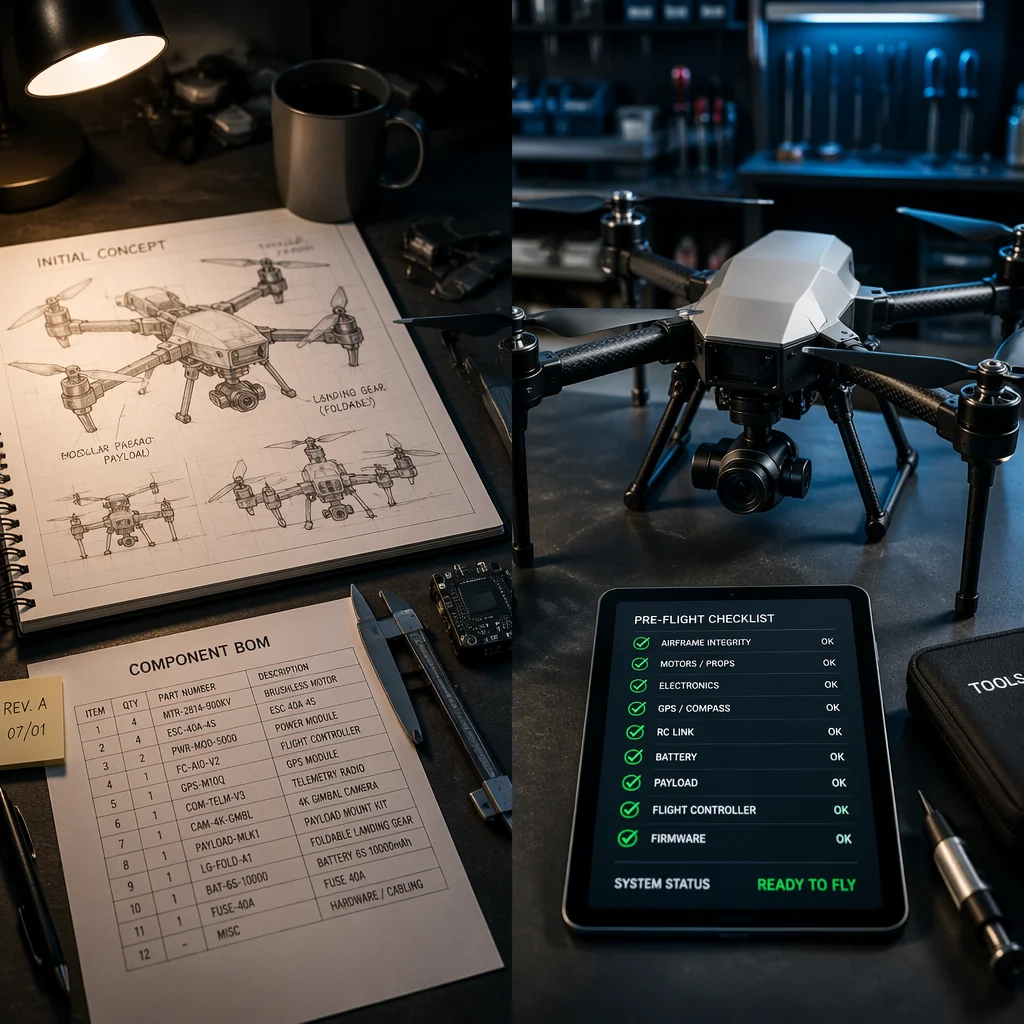
Share your mission profile, payload requirements, aircraft type, operating environment and target cost parameters. If you already have a BOM or component preference, include it. This requirements brief becomes the reference document for all downstream engineering decisions. The more specific you are — altitude, endurance target, payload weight, communication range, regulatory context — the more precisely we can frame the architecture.
02
Architect
We map the control, power, propulsion and communication stack around your requirements. Each system layer is reviewed for interface compatibility: flight controller to ESC protocol, battery voltage to motor sizing, receiver to antenna configuration, payload interface to data link bandwidth. The architecture document identifies critical interfaces and flags compatibility constraints before any component is selected.
03
Configure
With the architecture confirmed, we select specific components, firmware versions, interface protocols and kit depth. Each selection is documented with rationale linked to the architecture and mission requirements. The configuration output is a structured BOM with part numbers, specifications and interface notes — organized so you can review every choice before proceeding to integration.
04
Integrate
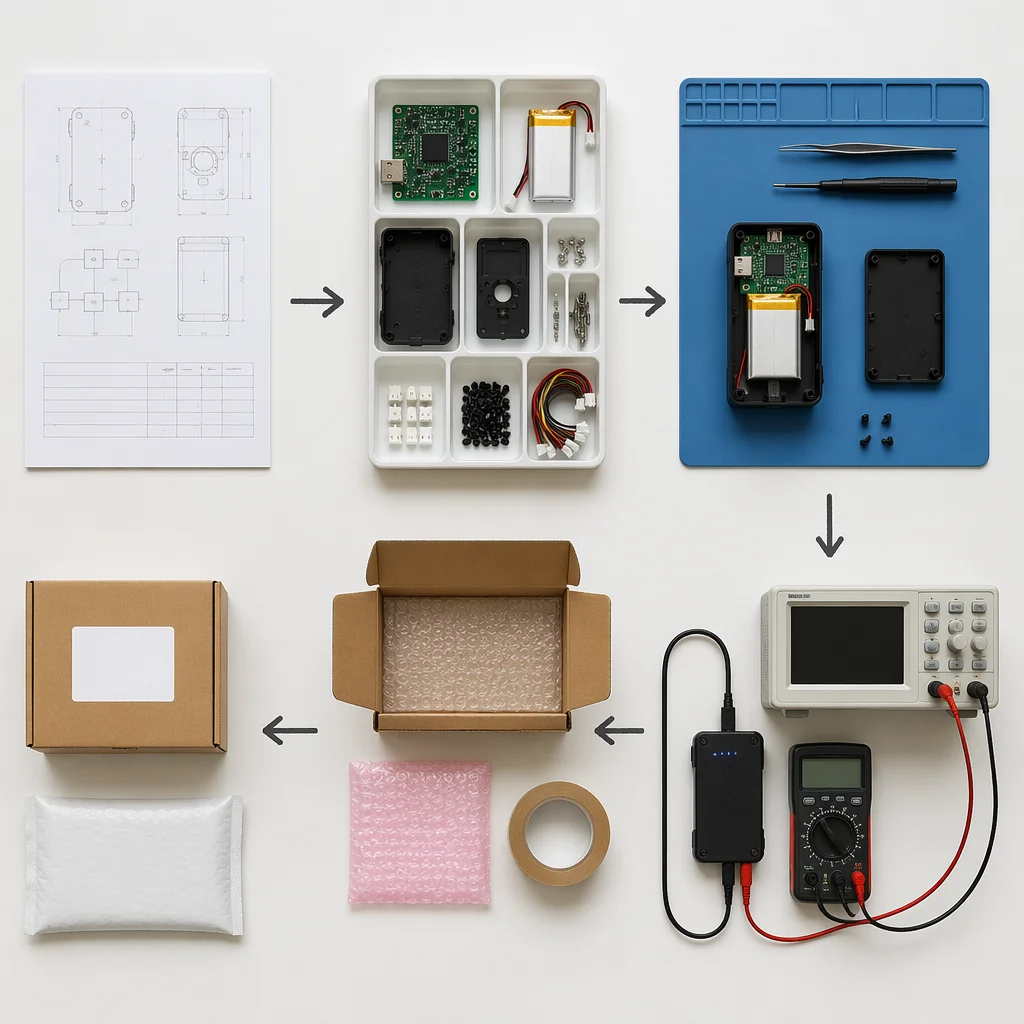
Components move through our integration stations in a defined sequence: incoming inspection, subsystem assembly, wiring harness preparation, firmware loading and mechanical fit checks. Each subsystem layer — control, power, propulsion, communication — is assembled and confirmed before integration with the next layer. For complete-aircraft builds, this includes airframe assembly, motor mounting and payload interface installation.
05
Verify
Bench-level functional testing confirms that the integrated system behaves as designed. We check power-up sequence, sensor data flow, motor response, communication link quality and firmware parameter alignment. For subsystem deliveries, verification focuses on the configured assembly. For complete aircraft, system-level checks include control response, propulsion coordination and a pre-flight readiness review with documented test results.
06
Deliver
Verified components and systems are packaged to our shipping standards: ESD-safe, moisture-protected and shock-isolated. Complete export documentation — commercial invoice, packing list, HS codes, certificate of origin — accompanies every international shipment. You select the shipping method based on timeline and budget. The build arrives documented, verified and ready for final commissioning at your location.